

Changing the Shape Before the Style
Something shifted for me about three months ago with slicked-back styles on type 4 hair. Not the technique exactly, just my thinking about where the work actually happens.
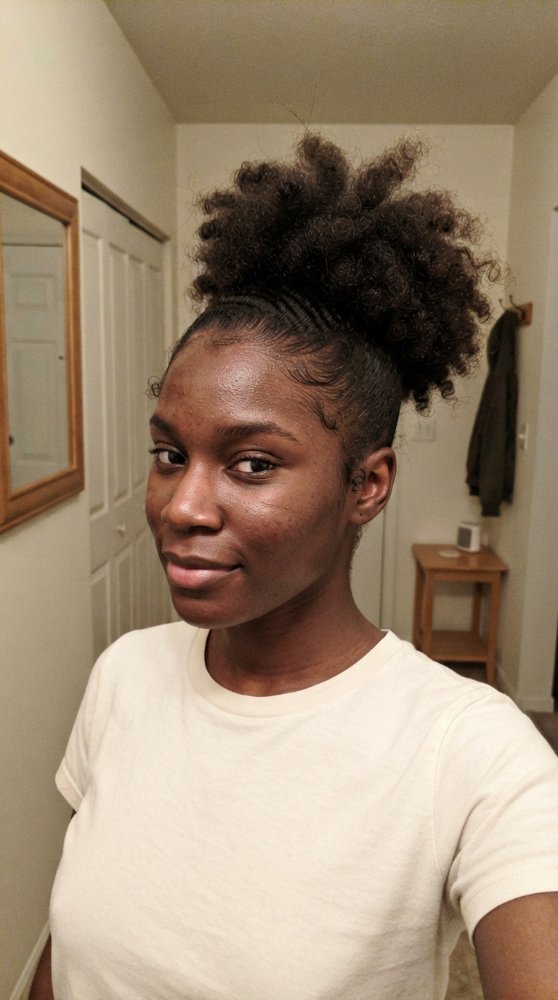
I’d been spending most of my time on edge control products and smoothing, and the styles were landing fine, but something about the perimeter kept nagging at me. The sleekness looked right in the chair. Two days later it didn’t look like anything.
Not because of humidity or product failure, but because the shape underneath wasn’t built to hold that silhouette without constant tension.
What I think now, and this is the thing I’m going to keep saying even when people disagree with me: the slicked-back baddie look on natural hair requires you to work the base shape first, and if you skip that step, you’re just doing temporary smoothing on a shape that doesn’t support the style.
The end look is not a product problem. It’s a structure problem. Most of what I see marketed toward this aesthetic is smoothing product and edge control, which treats the symptom.
You can lay edges until your wrist gives out and the style still won’t read the way it’s supposed to if the hair above it is doing something the smoothed perimeter contradicts.
That said, the base shape question is complicated because with natural hair, especially high-density 4B and 4C, the shrinkage pattern means the shape you think you’re working with when it’s stretched isn’t the shape you’re managing when it’s not.
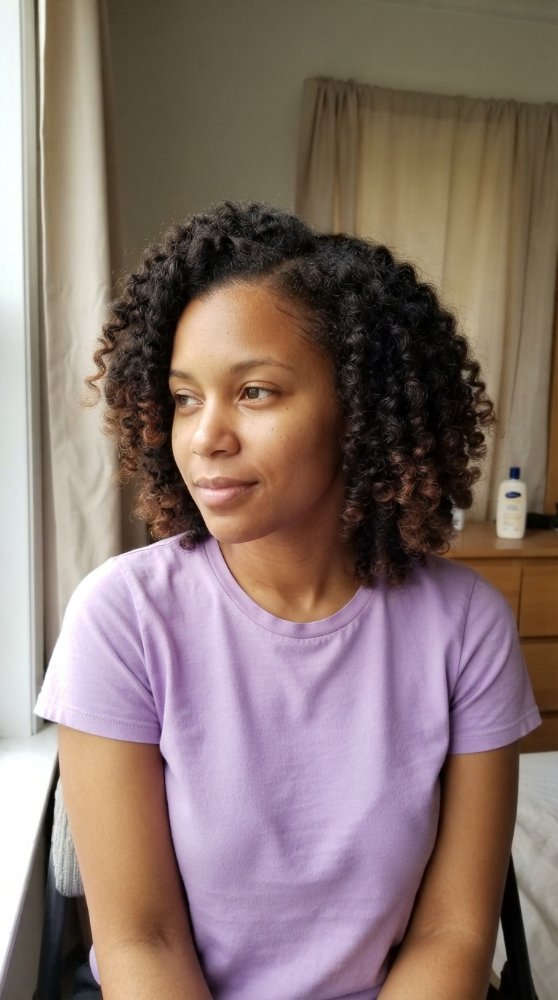
I’ve had clients come in wanting a high sleek puff with a very defined base, and when I look at how their hair sits after washing, the shrinkage pulls certain sections up faster than others.
There’s one side that always wants to lift differently. So we’re not working from a neutral canvas.
Product Order on Textured Hair
The order matters more than the products themselves. That’s the opinion I’ll defend in any room.
Two stylists using the same products but applying them in different sequences will get results that look like they used completely different formulations.
On natural hair going toward a smooth, sleek finish, putting hold product directly on dry or barely damp hair first is the most common error I see in results people bring me photos of.
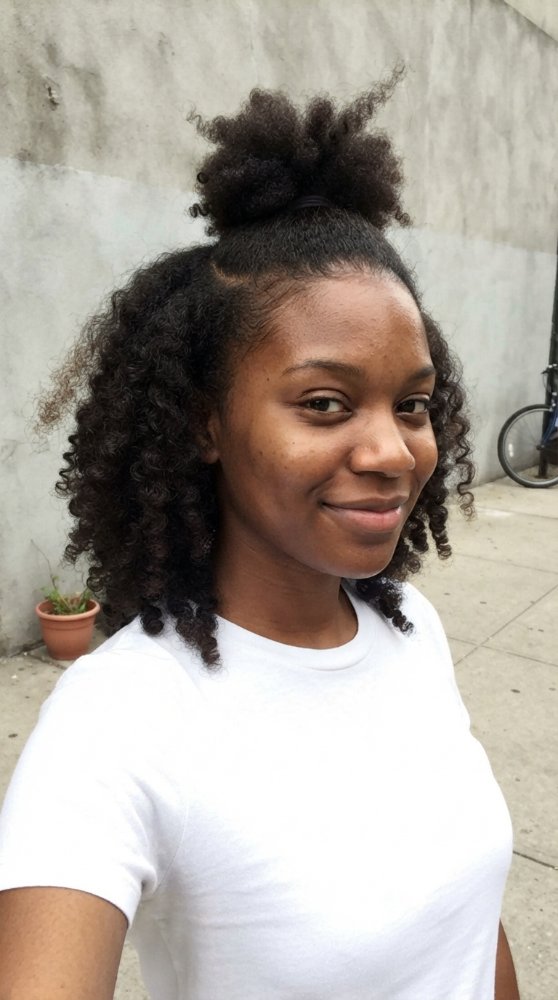
They’ll show me a look and say the edges came undone or the style didn’t last, and when I ask what they did, the sequence is always off.
For type 4 hair specifically, the hair needs to be damp enough that the cuticle is still open a little. Not soaking.
But applying anything to bone-dry hair means you’re coating the outside of a closed shaft that’s going to keep doing what it was doing before you touched it. The product sits on top. It doesn’t interact with anything.
And then you smooth it and it looks done, but there’s no grip underneath because the hair wasn’t receptive.
The execution had been creating a situation
I had a client earlier this year who’d been getting the same style done somewhere else for about eight months and kept rebooking every three weeks because it wasn’t holding.
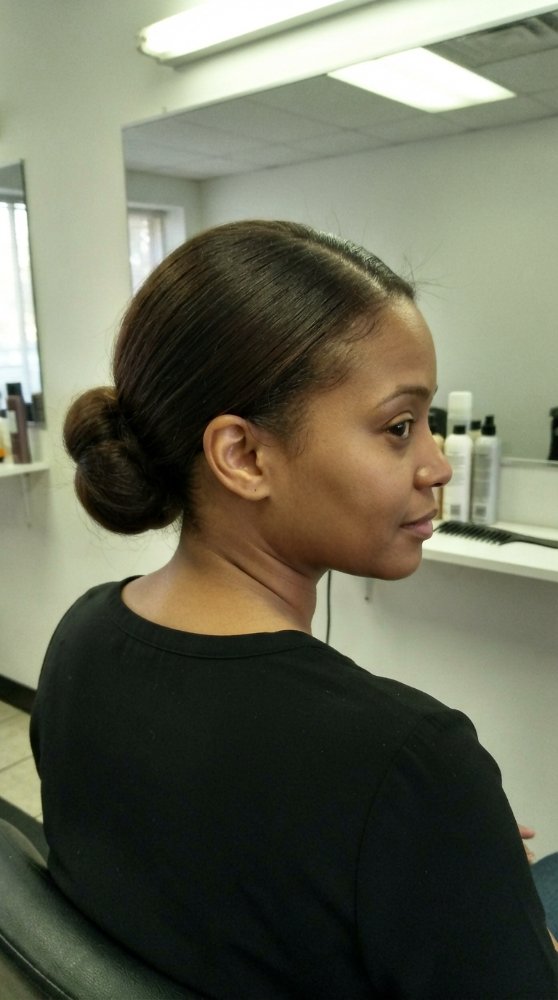
When she came to me the damage was further up than I expected given the length she’d maintained, and we had to have a longer conversation about what was possible.
She’d been getting her natural hair slicked into a low ponytail style, and the stylist doing it had been applying a lot of tension at the base to get the smoothness, which meant repeated stress in the same spots.
What she wanted wasn’t the problem. The execution had been creating a situation where we were now limited in what I could do without making the damage worse.
So we modified the tension in the pull and lengthened her time between appointments. She wasn’t happy about the longer intervals at first but by the third time she came in something had actually changed.
High-Hold Styling on Dense Hair
Dense hair is not the same problem as coarse hair and treating them the same way is where stylists lose the plot on this specific look.
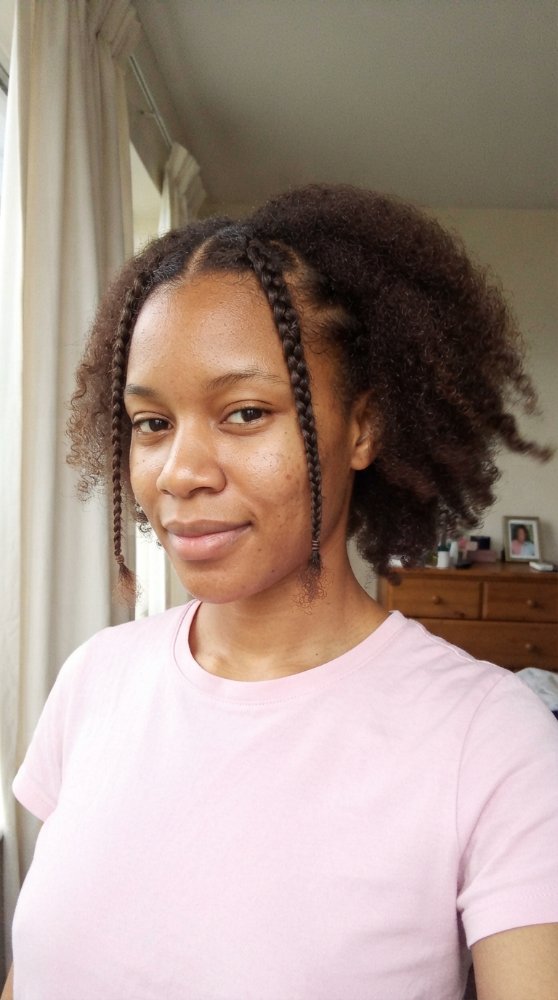
Density means there’s a lot of it. Coarseness means the individual strand is thicker.
You can have high density and medium coarseness, or the reverse, and those two scenarios need different approaches.
When someone has high-density 4C hair and they want a very smooth, flat finish, the hold requirement is actually about compression as much as it is about smoothing.
There’s a specific issue with gel-over-butter layering that I haven’t fully resolved. Whether the butter underneath creates a barrier that prevents the gel from penetrating or whether it creates a base that the gel can actually grip over.
I’ve gotten inconsistent results with the same products, different clients, and I don’t have a clean theory for it. That’s just sitting there unresolved.
Compression time
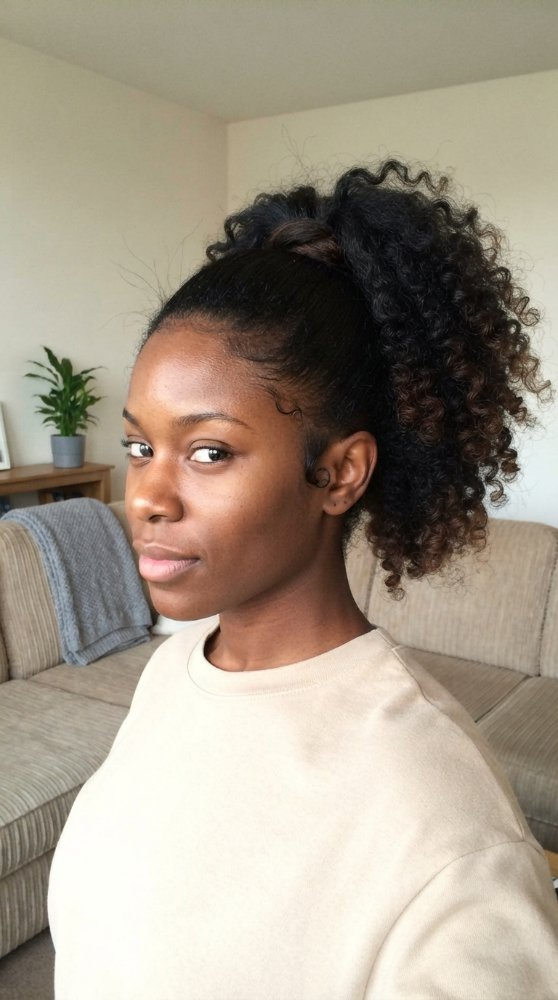
With dense hair, the volume underneath is always going to work against the surface finish. Especially on styles that require a flat crown or a very defined perimeter.
Compression time is something that gets dropped from a lot of styling advice because it takes longer and clients don’t necessarily want to sit.
But if you’re smoothing high-density hair and releasing it as soon as you’re done, you’re not giving the hold product time to actually set while the hair is in the position you want.
You’re releasing it back to itself. Then you’re surprised that it moved.
Wrapping, tension from a scarf or band, twenty minutes minimum, makes a material difference. Not in every case, not every texture, but with dense hair going toward a sleek finish, this is the part of the process I won’t shorten regardless of what the client’s schedule looks like.
The appointments that go sideways on this style are almost always the ones where something cut that step short.
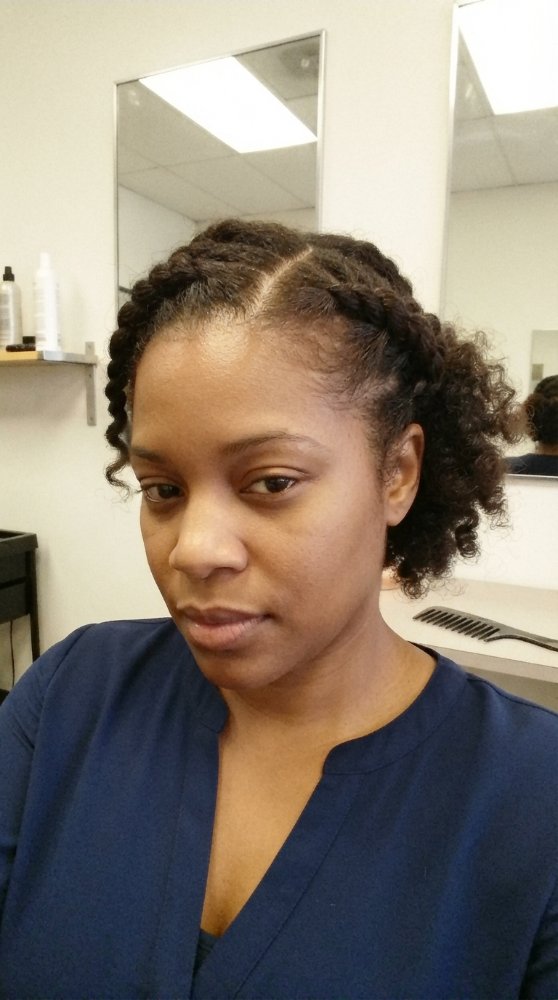
What Gets Called “Low Maintenance” Isn’t
There’s a version of this conversation I have more than any other. Someone comes in wanting a baddie style on their natural hair and somewhere in the consultation they say they want something low maintenance.
And I used to just nod and work with it. Now I push back, not rudely, but directly, because I think “low maintenance” means something different to most clients than it means to me, and if we don’t sort that out before I touch their hair we’re going to end up with a mismatch between what I did and what they expected.
Low maintenance to a client often means: I don’t want to do much to it every morning. Low maintenance to me means: the style requires a specific kind of upkeep that isn’t time-intensive but it is consistent. Those aren’t the same thing.
A sleek, laid style on natural hair can absolutely be low maintenance in terms of daily time, but it is not low effort in terms of moisture routine, protective measures overnight, and refresh schedule.
If the moisture routine isn’t there, the hair underneath the style is going to tell on you within a week. The style reads as low effort because the final look is clean and smooth. What supports that look is not low effort.
The consultation should include
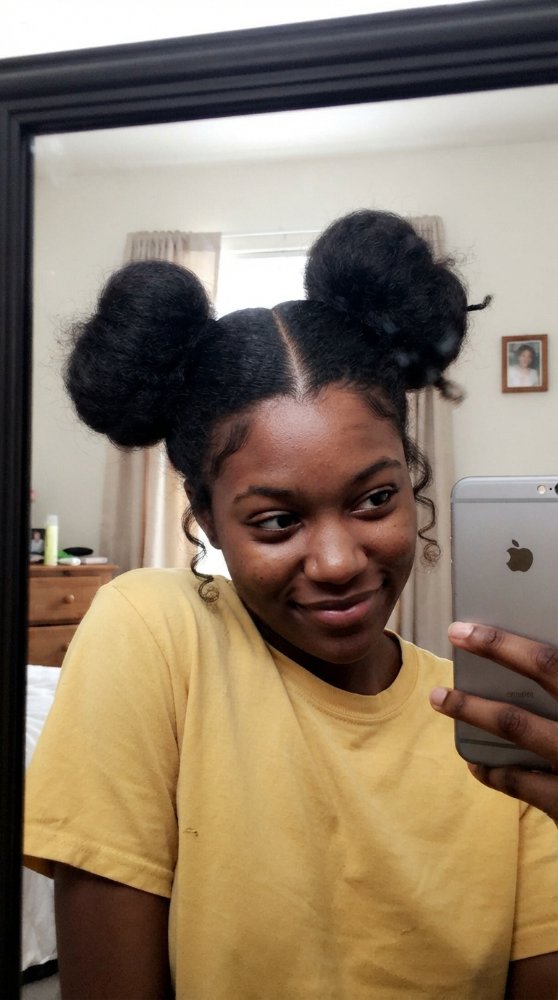
I’m not saying clients should be turned away from the look. That’s not my position.
My position is that the consultation should include what the style actually needs from them, not just what it looks like when it’s done.
I’ve handed people a finished style that looked exactly right and had them come back disappointed because it didn’t hold the way they expected, and when I traced it back it was almost always a home care gap.
Not a technique gap. Not a product gap.
They weren’t protecting it at night. They were getting it wet in the shower without intention. They were applying products over the top of buildup without clarifying first.
This is the part that still bothers me about how this category of style gets talked about online. The tutorials show the application process and the finished look.
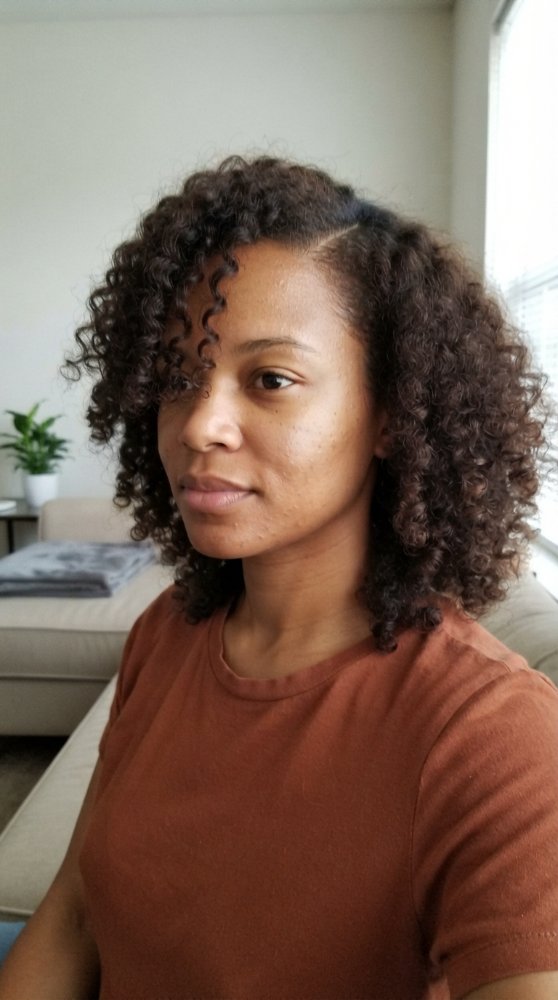
They don’t show day four. They don’t show what happens to the edges when someone sleeps without a scarf twice in a row.
That’s not the creator’s fault necessarily, that’s just the format. But it sets an expectation that the style is more self-sustaining than it is, and I’m the one managing that expectation in person.
Edges and What They’re Actually Doing
Edge control application has become its own sub-skill at this point and I think a lot of people are using more product than they need because they’re trying to compensate for a technique problem.
If the hair at the perimeter isn’t going to lay without significant product, the product isn’t going to fix that long term. It’ll fix it for today. The question is what’s causing the resistance.
Baby hairs are not the same thing as edges and styling them the same way is a mistake. The very fine hair that grows right at the hairline behaves differently from the more established hair slightly further back.

When someone wants a very specific pattern laid down at the front, the hair they’re working with at the very perimeter might not have the length or density to hold a defined wave or curl shape without the product doing most of the structural work.
That’s fine for a one-day style. It’s not sustainable as a repeated approach because the manipulation required to get that look when the hair isn’t cooperating is not nothing.
Repeated aggressive brushing at the hairline over time is something I watch for in clients who’ve been doing this look consistently for a year or more.
The hairline is one of the more vulnerable areas on the scalp. It doesn’t always show damage immediately.
I’ve had clients who weren’t noticing any thinning and I could see the difference in density from photos they’d showed me from eighteen months prior. That’s a slow enough change that it’s easy to attribute to something else or not notice at all until it’s more pronounced.
She mentioned once that she’d switched products because the one she’d been using for two years got discontinued and the new one required more brushing to get the same result.
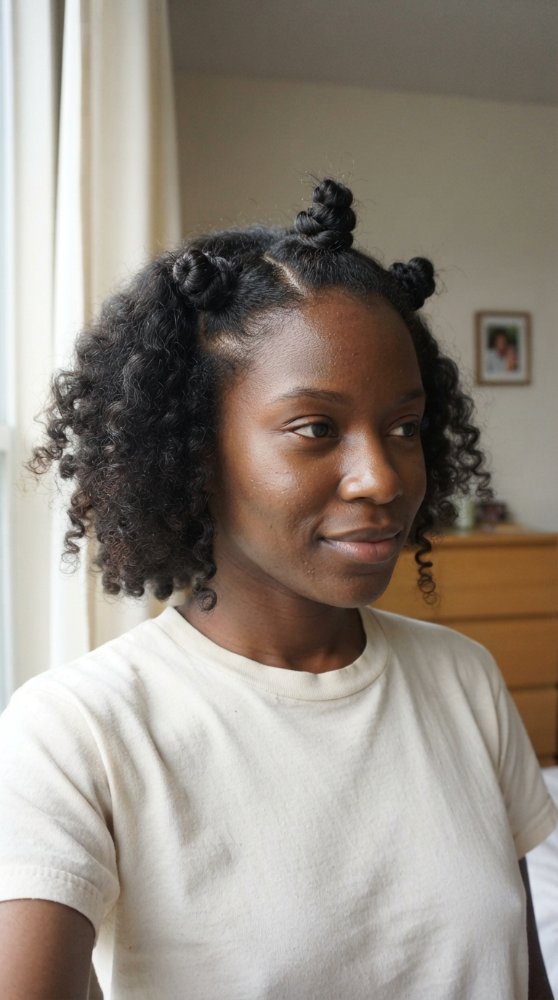
That was about eight months into what I was seeing in the hairline. I don’t know how much of it was the product switch and how much was just cumulative. There’s no clean way to separate those variables.
Stretched vs Manipulated
Stretching natural hair and manipulating natural hair are different processes that produce different results, and conflating them is how you end up with styles that look almost right.
When hair is stretched, you’re elongating the curl pattern without breaking it down. When it’s manipulated into a shape, you’re overriding the pattern to get a different shape.
Both are valid. The baddie aesthetic on natural hair almost always requires some degree of manipulation, and that’s not a criticism of the look. It’s just accurate.
The issue is that manipulation creates a look the hair will actively work against returning to. Stretched hair that’s released will spring back but it’ll spring back in a way that still resembles the original pattern.
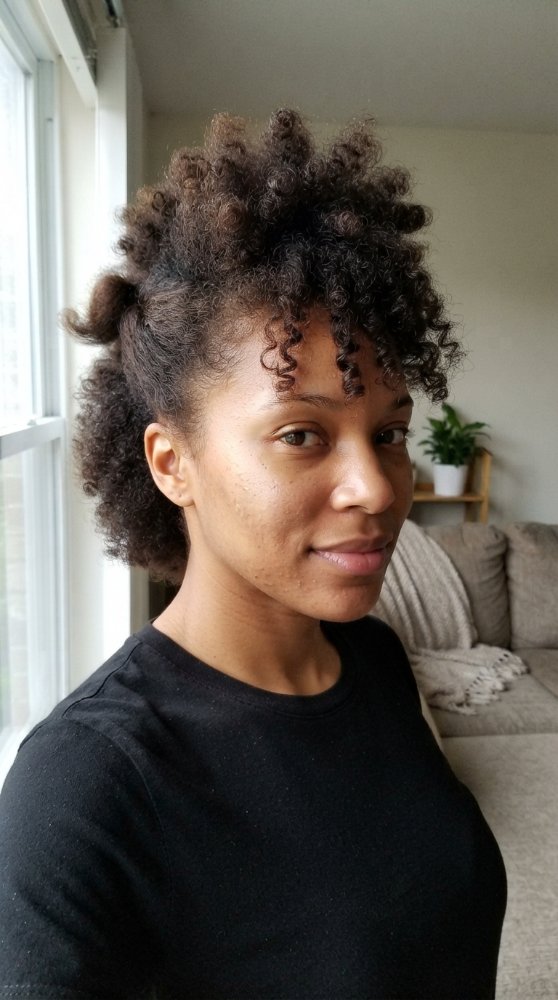
Manipulated hair that’s released goes back fast, and sometimes it goes back uneven, because you’ve been working against the pattern rather than with it.
That’s why the set matters. That’s why the compression step in Part 1 actually changes things.
Heat-free stretching
Where I’ve landed, at least for now, is that this look is most stable on natural hair when there’s a combination of some heat-free stretching done before the styling session, not same-day, ideally done the day before, which changes the starting point you’re working from.
You’re not fighting the full shrinkage pattern. You’re working from a hair that’s somewhere between its shrunken state and its fully stretched state, and that middle point is easier to smooth over and hold.
Whether that’s true across all textures, I’m not certain. In my chair with the clients I see, it holds up.
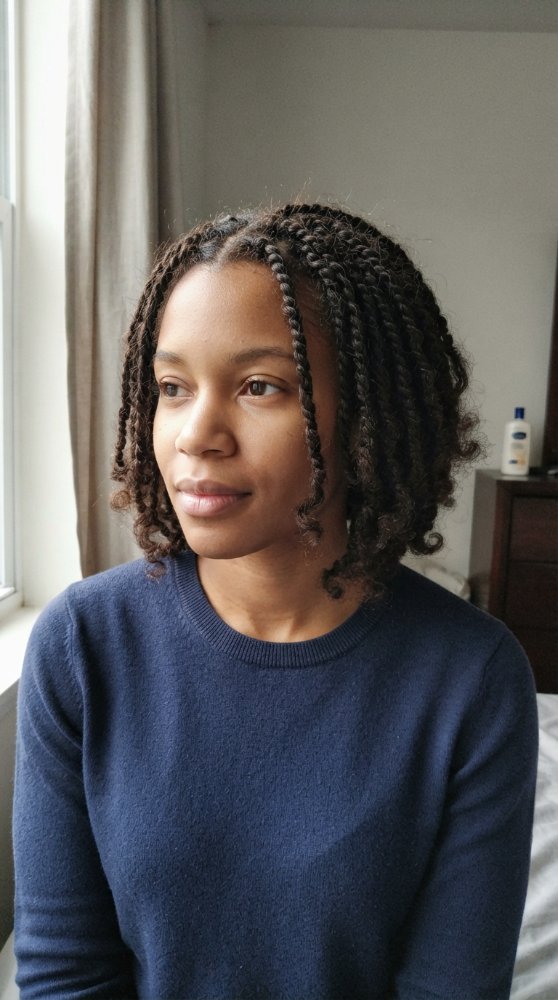
The difference in a style’s longevity when the hair has been stretched the night before versus when I’m trying to stretch and style in the same session is significant enough that I mention it at every consultation now.
Some clients will do it and some won’t. The ones who do come back with hair that’s easier to work with and styles that lasted closer to what we discussed.
Braided Bases for This Look
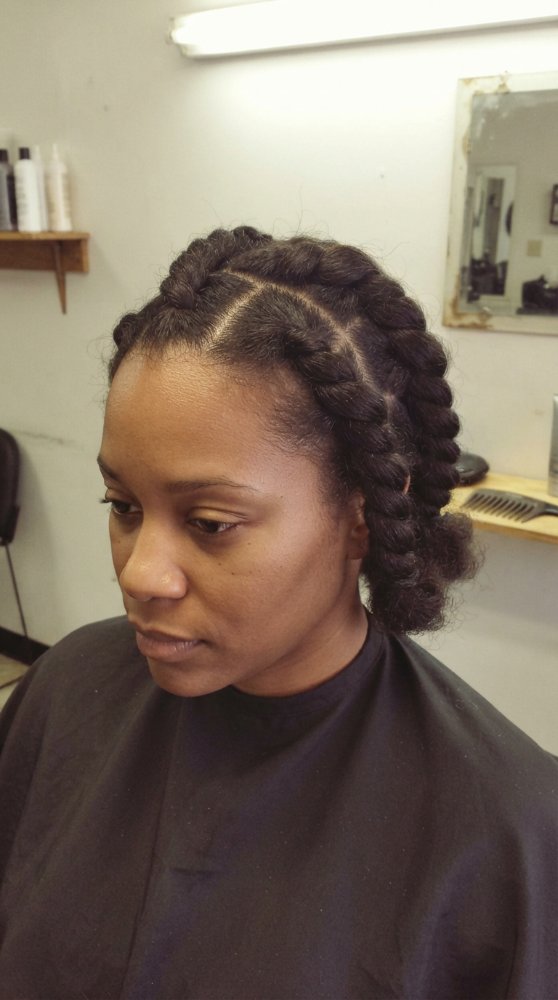
Cornrows under a slicked style are underused and I think the reason is that people associate braided bases with protective styles specifically and don’t think about them as a foundation for styles that read as fully natural-looking when done.
Flat cornrows, laid very close, change the behavior of the surface hair in ways that product alone can’t replicate. The surface hair isn’t trying to do anything on its own because there’s a structured base underneath it.
For clients with very high density or with hair that has a strong coil memory that keeps overriding the styling, a braided base under a slicked-back style changes the whole problem.
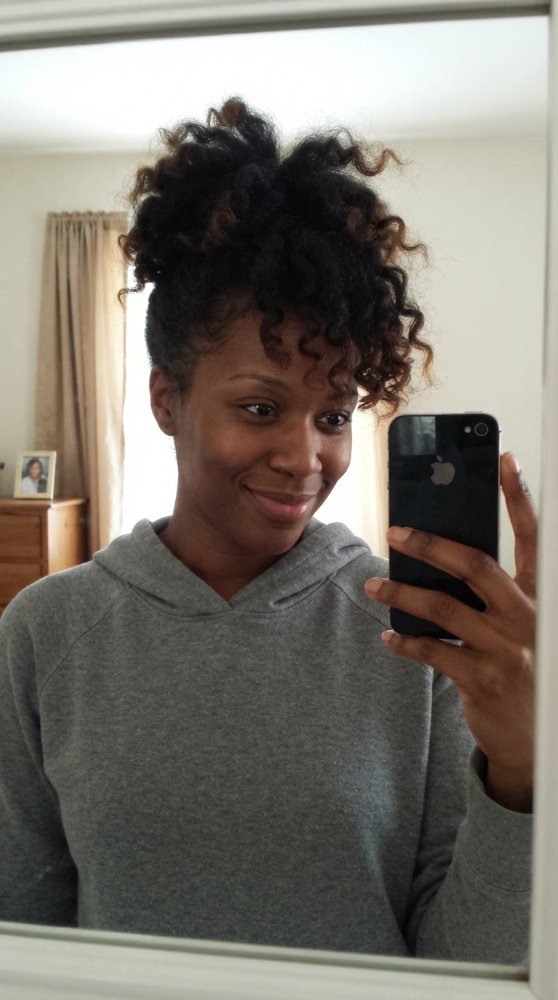
Now I’m not fighting the hair. I’m laying surface hair over a structure that’s already where I need it to be.
The edges are still the client’s actual hair. The baby hairs are still the client’s actual hair. But the bulk of what’s creating the silhouette is supported in a way that doesn’t rely entirely on tension and product.
Not every client wants that process, and the braiding itself adds time and requires a certain length underneath. It’s not always possible.
But for clients who are frustrated that their version of this look keeps failing at home, and where I can see the density is the main obstacle, this is usually what I suggest, and it usually changes their relationship to the style because suddenly it’s actually lasting.
Heat in the Middle of a Natural Hair Routine
There’s a version of this style that requires some heat and a version that doesn’t, and I don’t think clients always know which one they’re asking for when they come in.
Not because they haven’t done research, but because the finished result looks the same in a photo.
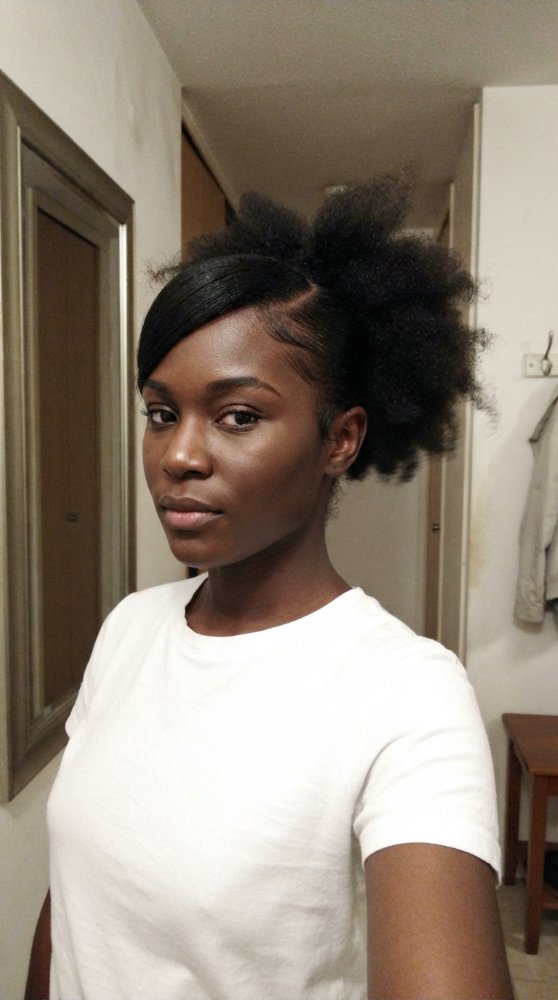
A sleek high puff on stretched natural hair and a sleek high puff where low heat was used mid-process can be almost visually identical in the right lighting. What’s different is what the hair does after day two.
Low heat used specifically to smooth the surface during styling, not to straighten the hair, not to change the pattern long term, just to close down some of the texture and help the product set, is something I use occasionally.
Not on every client, not for every version of this look.
But when someone has hair that refuses to smooth at the perimeter no matter what the product sequence is, and the density is high enough that compression alone isn’t doing it, a small amount of heat applied while the product is still damp can change the result.
I’m not talking about a pressing comb at high heat. I’m talking about a low setting, moving through quickly, not repeatedly.
Heat and natural styles
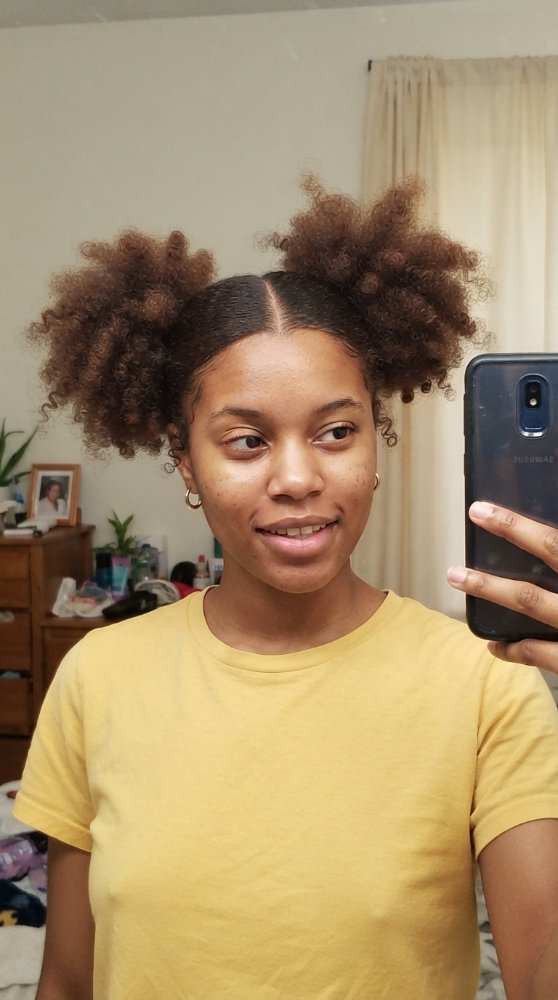
The reason I bring this up is that there’s a strong narrative in natural hair spaces right now that heat and natural styles are mutually exclusive, and I understand where it comes from.
There was a long period of heat damage being normalized and called “straightening” when what was actually happening was permanent curl pattern alteration. That damage was real. The reaction to it makes sense.
But the conclusion that any heat at any point during a styling process is incompatible with maintaining natural hair is a different claim, and one I’m not sure holds up across all textures and all use cases.
This is the part that gets complicated in consultations. If I mention heat as an option, some clients immediately tense up, and I’m not going to push past that.
It’s their hair and their comfort level matters. But I also think some of those clients are limiting their options based on a generalization that doesn’t account for how and why heat is being used.
Product Buildup on Type 4 Styles
Buildup accumulates faster on this look than on wash-and-go styles, and the reason is straightforward: more product is being applied more frequently to the same sections of hair.
The perimeter especially. Edge control, gel, holding product, whatever the layering sequence is, it’s going to the same spots repeatedly, and if clarifying isn’t happening regularly enough, you end up with a surface that looks dull and feels stiff in a way that isn’t hold, it’s residue.
The clients I see who’ve been doing baddie styles consistently for a while tend to fall into one of two situations.
Either they’re clarifying more than they need to because they can feel the buildup and they’re overcorrecting, which is its own problem because it strips the hair and then the styles go on stripped hair that’s thirsty and behaves badly.
Or they’re not clarifying enough, the buildup is affecting the way product sits, and they keep adding more product trying to get the finish to look right when the issue is actually what’s underneath.
Both of these tend to show up as a complaint about the style not working anymore when it used to, when actually the product routine has just drifted.
Clarifying once every two to three weeks is what I land on for most clients maintaining this look regularly. That’s not a rule.
Some people can go longer. Some need it more often, especially in humid conditions where sweat at the edges mixes with edge control and creates a situation that needs to be addressed sooner.
The point is that it has to be part of the routine deliberately, not done reactively when something already feels wrong.
What “Laid” Actually Requires
This is the thing that I think the tutorials skip because it’s not photogenic and it doesn’t make for a fast video.
Getting this look to actually last, not look good in the chair, not look good for the photo, but genuinely last through a week of regular life, requires time that most people aren’t accounting for in their routine.
Setting time. Not touching it while it dries. Not checking it. Not adjusting it.
Letting whatever compression you’ve applied, whether that’s a scarf, a wrap, a band, sit long enough that the product has actually dried in the position you want.
When that step gets shortened because someone has somewhere to be or just runs out of patience, the style is already compromised before they’ve left the house.
It might look right immediately after the scarf comes off. Give it two hours.
The styles that last are the ones where the setting step was not negotiable. That’s the through line across every client I’ve seen maintain this look well over time.
It’s not the product. It’s not the technique, though both of those matter. It’s that they didn’t rush the set. Everything else built on top of that.
I changed how I talk about this in consultations about a year ago. I used to frame it as a tip, something they could do to make it last longer. Now I frame it as part of the service.
Before you leave, you’re going to sit with this wrapped for at least twenty minutes. If that doesn’t work with their schedule we figure out the appointment time differently.
The ones who were skeptical about it the first time usually come back saying the style held longer than it ever had before, which I appreciate, though I also find it a little frustrating that it took that long to become non-negotiable because I wasn’t firm enough about it earlier.
Some clients have started doing it at home on their own refresh days, which is the actual goal.
Not that they depend on me to enforce it, but that they understand why it works and build it into their own process.
That shift takes longer with some people than others and I don’t have a good explanation for what makes the difference.

Leave a Reply